
Larimer County Arrest History
The sheriff's office posts its official Booking Report online. Pick an earlier Arrest Date and it becomes a practical multi-day arrest log. The date menu reaches back about 30 calendar days. That span is not a promise, though. Larimer County guarantees no fixed seven-day, 30-day, or permanent window.
Filtering by agency helps more than a one-day scan. It separates LCSO bookings from Fort Collins Police Services, Loveland Police Department, or Windsor Police Department entries. Each row still marks admission to Larimer County Jail. It skips citations and minor police contact. A Windsor arrest may even sit on the Weld County side.
Read Larimer County Arrest Dates
Log each result's date and agency. That habit keeps a news item or incident line from passing as a real Larimer County booking.
- Open the official Booking Report and select the newest date you need.
- Review Table view for a compact list, then open Detail view for the full event and charge fields.
- Move backward one calendar date at a time and note the arresting agency.
- Compare a reported incident only through the separate Incident Blotter, keeping it labeled as incident data.
- Use the court case number or agency case number to follow the record with the correct custodian.
For today's slice, the Daily Arrest Report fits better. The weekly log serves a wider review. It covers days already gone, not a fresh same-day search.
Larimer County Arrest-Log Fields
The Booking Report shows compact rows or fuller detail. Fields vary by entry, so leave a blank cell alone rather than filling it from elsewhere.
| Entry field | Meaning in the log |
|---|---|
| Identity | Name, date of birth, inmate number, sex, and race when supplied. |
| Time and place | Arrest date and time plus arrest location. |
| Agency | Arresting agency, officer, authority, and agency case number. |
| Custody | Hold reason and county jail identifiers. |
| Charges | Charge text, level or statute when available, and additional-charge indicators. |
| Bond and next hearing | Bond type and amount, plus possible court case, date, time, and location. |
| Photo | No public booking-photo field appeared in the official interface reviewed. |
A "resolved reason" is jail data only. LCSO's Records Unit keeps no dispositions. Confirm the ending through the Larimer court record. An old log line never closes a case by itself. The official Booking Report page displays the interface for moving among dates and display modes.
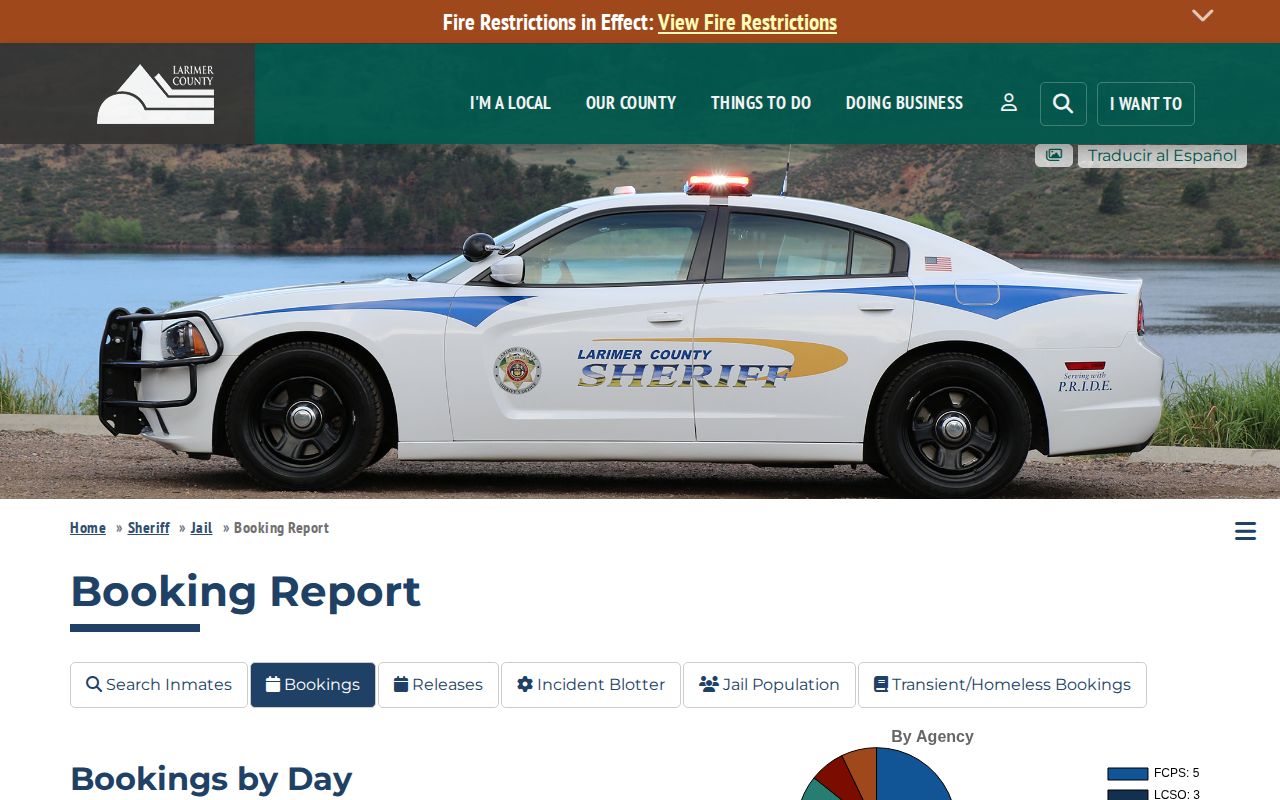
The live report supplies current and earlier dates.
Larimer County Weekend Bookings
Evenings, weekends, and holidays are traditionally the busiest booking periods, per the jail FAQ. Volume affects processing time too. So does cooperation from the person booked. A dense cluster of entries can appear around a busy stretch. A late posting can too. Nothing says weekend bookings wait until Monday.
A multi-day pass lines up adjacent calendar dates. That helps it catch a record posted after a first visit or one that crossed midnight. A short run of rows proves no trend. Enforcement activity, agency participation, processing time, reporting limits, and the date menu all shift what appears.
Note: Compare complete date ranges and agency filters before drawing conclusions from a short stretch of Larimer County booking rows.
Older Larimer County Arrest Records
A date dropping out of the live selector does not destroy the record. LCSO's Records Unit retains sheriff records. Its arrest and charge-summary route reaches back to 2005. The online display window and legal retention are separate things. The sheriff publishes no booking-photo retention term. No permanent archive exists either. The Larimer County recent-arrests hub covers broader record and photo-request paths.
Start an older search at the LCSO Records page. The JustFOIA Criminal Justice Records form can request several items. Arrest records, charge summaries, case records, and a booking photo are separate choices. Records usually stay unavailable for 10 to 14 days after the incident. Then they are reviewed and invoiced. Standard documents run $0.25 per page. Search, redaction, media, certification, and card costs may also apply.
Ask whether the record was retained, transferred, sealed, or destroyed. For a legal result, use the Judicial Branch. Colorado State Archives can hold very old material. It lists no modern Larimer booking-photo collection.
Larimer County Arrest News
The Loveland Reporter-Herald's Daily Record stands out as a recurring local blotter. Columns list Loveland police arrests and sheriff entries. Details include day, time, broad location, age, gender, city, and investigation charge. It reads like news, not a jail table. It also runs no booking-photo gallery.
The Coloradoan prints selected Fort Collins and county crime or court stories. North Forty News runs occasional pieces across Fort Collins, Loveland, Estes Park, and other areas. Story coverage adds context. It may skip routine bookings, cite a different date, or lean on an agency release. Official agency news pages share that limit.
The North Forty News category page shows an occasional story feed, not a date-complete jail log for Larimer County arrests.

A news story can open the door. Confirm the booking with LCSO, then check the case result with the court.
Booking, Incident, Release, or News
Larimer's web system splits records into four kinds, each answering a different question. The Booking Report is tied to an arrest date. The Incident Blotter tracks events that residents report to the sheriff. An entry there is not proof of an arrest. Released Inmates is keyed to custody status. Its data includes people released eight or more hours earlier. A newspaper log, meanwhile, is editorial coverage the publisher controls. This separation is why counts rarely line up across sources. Someone can show in booking history yet be gone from the current roster. One incident might bring no arrest, a single arrest, or several booking events. A release entry tells you when custody changed. A court file tells you whether a charge was filed and how the case ended.